
1936
Tricolour champions

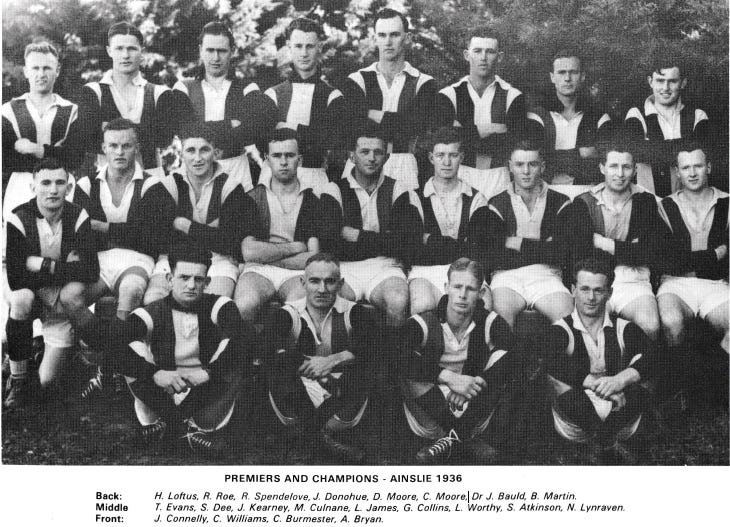
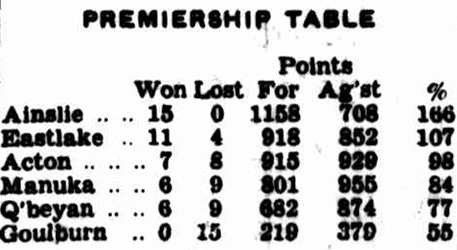
Ainslie, after going close in 1935, won its second premiership. Bolstered by some new recruits, the Tricolours started the season in winning form and didn’t let up, their 17th successive win being the grand final. Goulburn withdrew mid-season after a rift developed between club officials and part of the playing group. The remaining four sides were evenly balanced, with Queanbeyan being the unlucky side to miss the finals and Acton outlasting the others to make the grand final. Roy Seton (Acton) and Richard Roe (Ainslie) were jointly awarded the inaugural Mulrooney Medal for the best and fairest player in the competition. The visiting Queensland side salvaged a last-minute tie against Canberra at Manuka. Eastlake broke Ainslie’s long dominance of the junior competition, winning its first premiership at this level. Canberra finished fifth at the national schoolboys carnival in Adelaide (ahead of New South Wales and Tasmania).
The Season
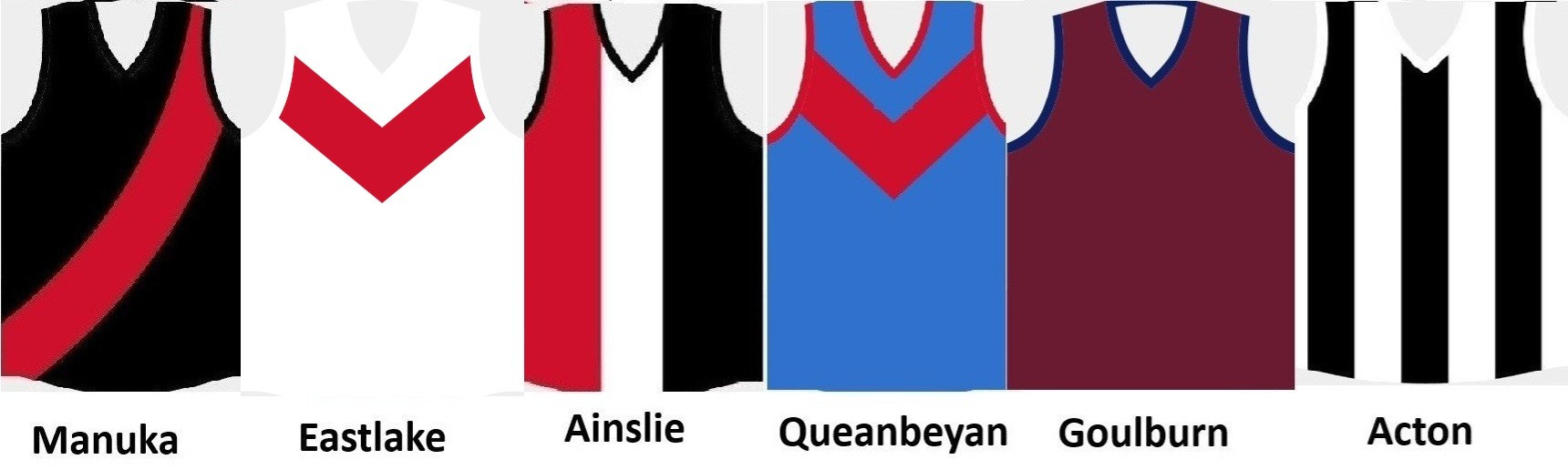
The CANFL comprised senior and junior competitions, as well as a prototype intermediate grade. In June, the half-time break was reduced to 10 minutes to ensure games finished in reasonable light. Eastlake changed its guernsey design to one matching South Melbourne’s.1
Mulrooney Medal
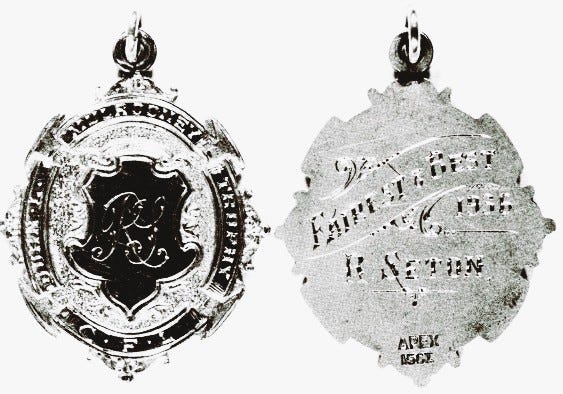
In May, the League decided to award a medal for the competition’s best and fairest player, to be named after John Mulrooney who had been League President since 1928 (except for 1935, when he was secretary). While the League had awarded a best-and-fairest medal in 1935, this was done to celebrate the silver jubilee of the accession of King George V and Queen Mary to the throne. The new medal was intended to be ongoing. The medals awarded in 1931 and 1933 had come about only when W.B. Hicks, a League (and Manuka) supporter, had taken it upon himself to donate a medal, although the League oversaw the awarding and counting of votes. The inaugural Mulrooney winners, Roy Seton (Acton) - a local who played in the 1932 schoolboys side - and Richard Roe (Ainslie) - a Western Australian recruit - tied on 16 votes and were both awarded medals although the League stated this would not be done in future seasons.2
Grounds
In April, the Department of the Interior announced that no football would be played on Manuka Oval in 1936 as the entire playing surface was to be top dressed and a new turf wicket laid in readiness for the visit of the M.C.C cricket team in February 1937. The CANFL protested, suggesting that work on Manuka Oval begin in September. The Department then established a five-person committee, including a nurseryman from Melbourne, to determine whether the new turf wicket needed to ‘lie idle for some months to enable the surface to knit properly’. By mid-April, the Department had not even agreed to the season starting as usual in early May. Finally, it decided that Manuka could be used for Saturday matches only, not training.3
This delay had a practical effect on all the clubs, not just those based at Manuka, with the Canberra Times observing in first round games an ‘obvious lack of training due to uncertainty about ground allocation’, ‘reflected in many mistakes, fumbling and misdirected kicks’. Oddly, ‘it was not the veterans who were suffering leg cramp but the younger brigade’.4
As it happened, Manuka continued to train at Manuka Oval until mid-June when it was ‘suddenly locked out’. The Red and Blacks then moved to Telopea Park School Oval on Tuesday and Thursday nights, sharing the small oval with Eastlake and, later in the season, the Canberra representative team. In late 1935, the Minister approved regrading of Kingston oval, and the laying of a turf wicket surrounded by a small grassed infield (with a watering system). The work meant Eastlake was unable to use the ground (had it wanted to) in 1936 - John Mulrooney accusing the authorities of prioritising the cricket season. Acton became somewhat itinerant, moving its training from Manuka to Northbourne and splitting its (only five) home games between these two grounds and Telopea Park. The latter was said to be ‘too small for open systematic play’.5
The first semi-final (Acton v Manuka) was played at Northbourne Oval in early September, the playing surface was said to be ‘unsuitable for a hard game late in the season… both clubs reported an unusual crop of injuries… most of them due to the hard ground’. A minor controversy erupted when Acton was accused of ‘commandeering the principal dressing room, for which Manuka wished to toss’, ‘consigning Manuka to the outer darkness and inner bareness of… twin cubicles’. Acton’s secretary wrote to the Canberra Times pointing out that ‘principal dressing room’ was, in fact, Ainslie’s private training quarters and that Ainslie had provided Acton with the key. Later in the week, the League voted to support the practice of tossing for dressing rooms.6
Seniors
The seniors played a 15 game regular season, with a bye returning after Goulburn’s withdrawal. The Prime Minister, Joseph Lyons, formally opened the season on Saturday, 2 May, with Mrs Lyons unfurling Manuka’s 1935 premiership flag. The Leader of the Opposition, John Curtin, also attended.7
Goulburn began the season promisingly with a new captain-coach and several new players from ‘the border districts and Melbourne’. While they remained a young side and lost their opening games, all played at home, the mood at the club was ‘jubilant’ in early June after almost defeating Eastlake, arguably the club’s best performance since 1933, albeit the Red and Whites were four players down until half time (their car having broken down before Collector). While soon after the club forfeited a match to Manuka when its ‘motor bus’ suffered ‘two blowouts and a puncture’, this was nothing new.8
Around this time though, a rift appears to have developed between the captain-coach and club officials on one side, and part of the playing group on the other. The Maroons lost by 133 points to Ainslie in a ‘picnic match’ at Collector in late June. The Goulburn Evening Penny Post reported that the side was ‘lucky’ to have made the trip to Canberra for its next game against Acton as ‘unrest amongst a section of the players’ had ‘unbalanced the team’. Goulburn withdrew from the competition the following Monday night, with officials saying that ‘when there is a team which is prepared to train and to pay heed to the captain and coach… officials will be willing to devote their time to the interests of the players’. It would be over three decades before a Goulburn side returned to the CANFL.9
For the first time ever, Queanbeyan began the season absent questions about whether it would disband. In fact, the Blues’ prospects looked much brighter with several capable new and returning players turning out for the club. Still, Queanbeyan struggled through the first half of the season. The Canberra Times lamented that the team ‘seldom plays two games alike. One week they appear to have a wonderful chance of annexing the club’s first premiership pennant, while on other occasions they display inferiority’. Things started to improve when the Blues’ 1935 coach and key player, Floyd Primmer, returned from a brief stint with Manuka. Queanbeyan also swooped on some of Goulburn’s best players when that club disbanded. The Blues developed a game plan well-suited to their small home ground, using ‘crowding tactics’ involving ‘five men on the ball’ and ‘attractive handball combinations’. Critically, Queanbeyan defeated Manuka twice in the latter rounds, meaning the two sides were neck-and-neck by the final game of the regular season.

The Blues needed to defeat Ainslie at Queanbeyan Park to ensure a finals berth. They led by over three goals at half time, but only two points at the next break. ‘The defenders on both sides were saving splendidly’ and neither side could gain a significant advantage until a place kick by Ainslie’s Jack Donohue (a Queenslander) raised two flags, giving Ainslie a nine-point win. Queanbeyan missed the finals on percentage.10
Manuka lost over half its 1935 premiership side, who were replaced by younger players. By mid-season, Manuka was in last place in the five-team competition, ‘badly handicapped by absences and injuries’, in one game calling on two ‘old warhorses who were saddled up at the last moment’. Its forward line was consistently weak. The Red and Blacks sneaked into the finals on percentage after a surprise 10 point home win over Acton in the last round, the side, spurred on by ‘barrackers in full voice’, taking the lead for the first time half-way through the last quarter. This game proved to be a dress rehearsal for the first semi-final but with the opposite result. Manuka were 28 points down at three quarter time but ‘stormed down the slope’ at Northbourne in the last quarter to be within five points of the Magpies with only minutes to go. Too little time as it turned out - Acton ‘played almost to a stand-still’, holding off ‘successive Manuka attacks’ for a five point win.11
While Eastlake retained most of their 1935 side, they were less competitive than they might have been for two key reasons. First, their talisman centre half back, Bill McKinstry, missed the entire season with a knee injury, and second, they trained poorly until (too) late in the season. They were said to be ‘sadly in need of hard training’ (late May) and to be ‘badly conditioned and tired players’ (early August). Soon after, ‘stung by comments on their lack of condition’, they ‘resumed hard training’. Even so, by end-July, they had lost only twice (to Ainslie) and were in second place, where they finished the season. The finals did not go well. The Red and Whites lost to a bigger and heavier Ainslie by 108 points in the second semi, a record margin for the finals. Acton then toppled them by 21 points in a ‘rarely exciting’ preliminary final. Eastlake had ‘left their training a bit too late in the season to become effective.’12
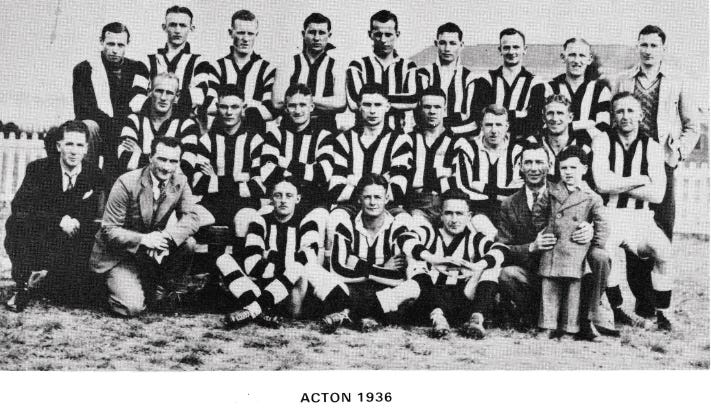
Perhaps unkindly, it might be said that Acton made the grand final because they were the least worst of Ainslie’s opponents. As in 1935, their defence, led by Mulrooney Medallist, Roy Seton, was strong. While the Magpies’ ruck division was strengthened by some new and returning players, their forward line remained weak for much of the season, only improving towards the end. After a slow start, Acton accumulated enough wins to finish third, held off an improving Manuka in the semi-final, and dispatched an underdone Eastlake in the final to find themselves in the premiership decider. Their training no doubt helped - Acton ‘interspersed short hikes with plenty of running and ball practice’.13
Ainslie, runner-up in 1935, kept most of their key players and gained some capable new recruits (including Connelly, captain of their 1935 junior side). Arguably what set Ainslie apart was its forward line led by George Collins - who kicked 99 goals for the season - and centre half forward Richard Roe. Roe had won the best and fairest medal in the Western Australian Amateur Football Association in 1934. He came to Canberra to work for the Council for Scientific and Industrial Research (Assistant Research Officer, Weeds) and played his first game for Ainslie in mid-June. An immediate star, he collected 16 votes in nine games to win the Mulrooney Medal (jointly with Roy Seton).
Ainslie started the season with a series of solid wins and kept going throughout the season, its winning streak rarely seriously challenged. It reached the grand final undefeated, but was missing Roe, who left Canberra after Ainslie’s big win over Eastlake in the second semi-final. Nevertheless, without dominating the match, the Tricolours were 23 points up at three quarter time as Acton’s forward line woes returned. The Magpies then launched a last quarter fightback and were within a goal with ‘barely time on left to play’. Ainslie’s Donohue place-kicked a point, Spendelove cleared a final Acton attack, before a ‘forty yards punt by Collins sailed high and accurately through the posts’ to give the Tricolours the Canberra Times Shield.
C Moore and Collins were best for Ainslie, while Robbie was best for Acton. The umpiring attracted some criticism - the experienced Miller replaced Frank Bishop who had umpired all the earlier finals, and it was noted that ‘umpires as well as players require match practice to tune them up to the grand final standard’. The Canberra Amateur Athletics conducted an 880 yard race at half-time.1415
The grand final would turn out to be George Collins’ final official game of football. Playing in a trial for Essendon against Coburg in April 1937, he re-injured the ankle he had hurt in Canberra in 1936 and retired on medical advice.16
Intermediates
The League had been trying to establish a seconds or intermediate competition since 1931, with success really only in 1933. Such a competition would be ‘a means of keeping former juniors in the game until they reached senior standard’ and provide an ‘opportunity for learning the game by young fellows attracted to it from other codes’. The junior committee was charged with developing an intermediate competition in 1936 and four teams - Ainslie, Eastlake, Manuka and Queanbeyan - seem to have played a four-match regular season followed by a short finals series. Manuka won the premiership.17
In late July, the Canberra Times reported that the junior committee had put in a ‘good deal of difficult groundwork’ to put the intermediate competition on a ‘progressive basis… with a view to the maintenance of a regular perennial competition’. However, ‘a lack of enthusiasm in some clubs’ meant that only a ‘fair measure of success’ was achieved.18
Juniors
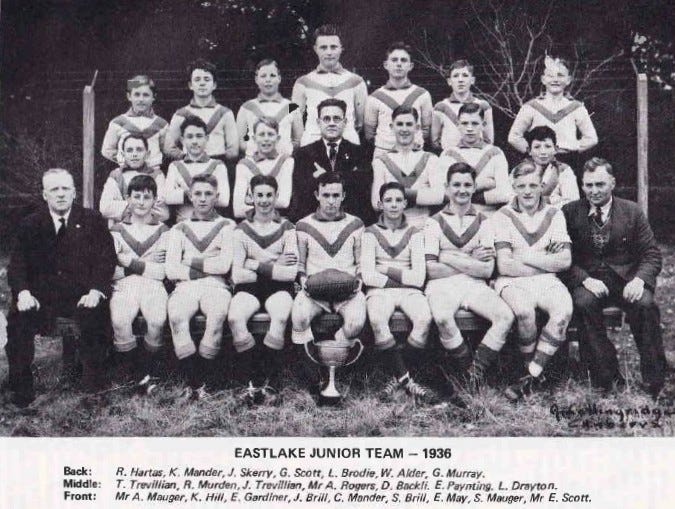
The juniors competition reduced from six to four teams - Ainslie, Eastlake, St Christopher’s and St John’s (Queanbeyan and Duntroon dropped out). Ainslie, the dominant side for several seasons, lost twice to Eastlake during the regular season, which took out the minor premiership. The Tricolours were still strong though, having eleven players in the schoolboys carnival side, and defeated Eastlake in the first semi-final. Eastlake then inflicted a big defeat on the smaller St Christopher’s side, before turning the tables on the Tricolours in the grand final, winning by eight points. The season finished earlier than usual (in early August), so as not to overlap with the national schoolboys carnival.19
Queensland visit

After potential visits by New South Wales and Broken Hill fell through, Queensland offered to play a match in Canberra after deciding not to attend the first national amateur carnival in South Australia (being held to celebrate that state’s centenary). The CANFL quickly accepted the Maroons’ offer, with the match set down for 15 August at Manuka.20
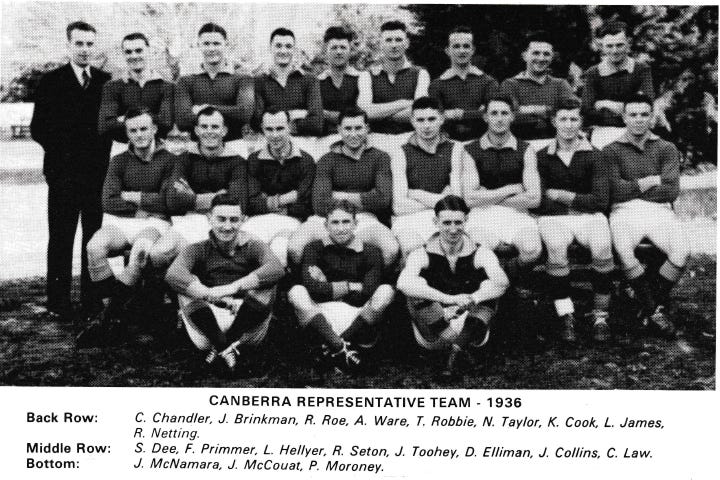
A preliminary squad - criticised for including fading veterans at the expense of in-form youngsters - commenced training at Telopea Park oval under coach, R. G. Kappler. These trainings were however ‘anything but successful’ with few of squad attending and several of those that did looking ‘lethargic and slow’ compared to Manuka players also training on the ground. The final side, announced on the Monday before the match, was said to be a good side, but not the best available. The Queensland manager said the same about his team.21
The Maroons arrived on the Friday morning before the game and were given a reception at Parliament House by the Federal Treasurer, R G Casey, followed by a tour of building. After a practice run that afternoon, the team retired to the Hotel Kingston for the night.22
The match the following afternoon was always tight, with the ‘advantage… see-sawing every minute’. Queensland led by four points at half-time and three at the next break. With Canberra leading by a point, key players injured on both sides (Collins and Elliman for Canberra, Ryan for Queensland) and full time imminent, Canberra’s fullback (Keith Cook) slipped on the top-dressed turf while turning to clear the ball from the goal square. The nearest Queenslander (Hele) ‘pounced on him before he could recover’ forcing Cook to release the ball. ‘Leaning over his opponent’, Hele punched the ball through for a behind, giving Queensland the tie.23
After a ‘smoke social’ attended by an ‘uncomfortably large’ crowd at Forrest Bowling Pavilion that evening, the Queenslanders were given a tour of the city on the Sunday morning and a picnic at the Cotter in the afternoon, before catching the train to Sydney on Monday. The Queensland manager ‘looked forward to the day when, with aerial transport, they would be able to even go to Perth and return home within three days.’24
Schoolboys in Adelaide

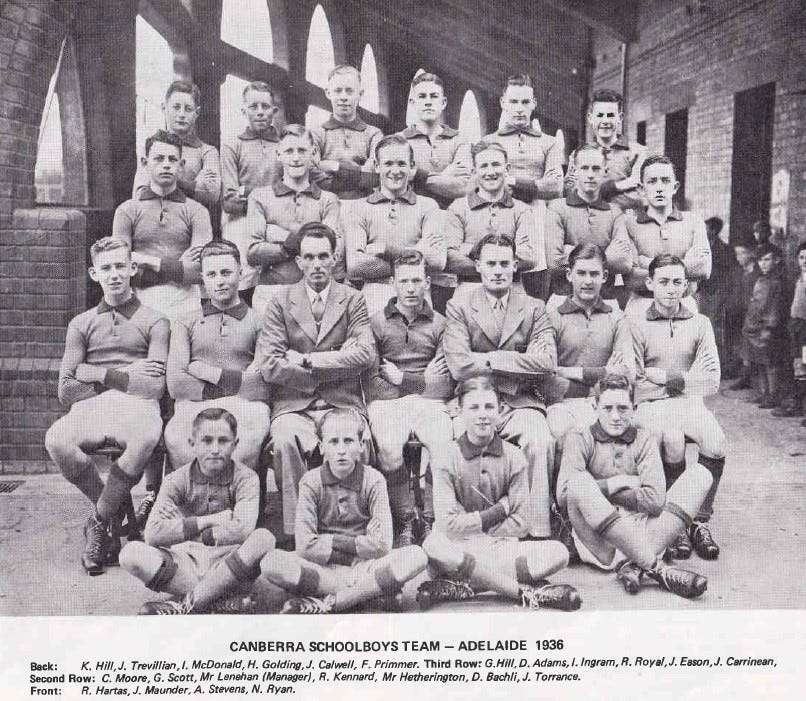
South Australia hosted the national schoolboys carnival in August (another event to celebrate the state’s centenary). All six states and Canberra participated for the first time. Boys were required to be under 16 years of age on 1 August 1936 and to be ‘bona fide scholars attending school in the Federal Territory or Queanbeyan.’ The team was selected by school masters and ‘the whole of the organising’ was undertaken by teachers. Mixed results in trial matches left the Canberra Times somewhat unimpressed. While the ‘better players’ showed the benefit of ‘capable coaching’, the Times suggested that a ‘reorganisation of the touring team by some authority experienced in the Australian game would be appear to be necessary…’.25
The team left for Adelaide via Melbourne, sharing the second leg of the long rail journey with the Victorian, New South Wales and Queensland teams. They were ‘smartly dressed, their uniforms including blue and gold blazer, blue tie, grey slacks, and blue and gold cap…’. The local mayor gave them a formal welcome at Unley Oval (along with the Western Australians), and the boys said to be ‘very impressed’ with ‘the verdancy of the park lands’. One boy was billeted next door to Don Bradman.26
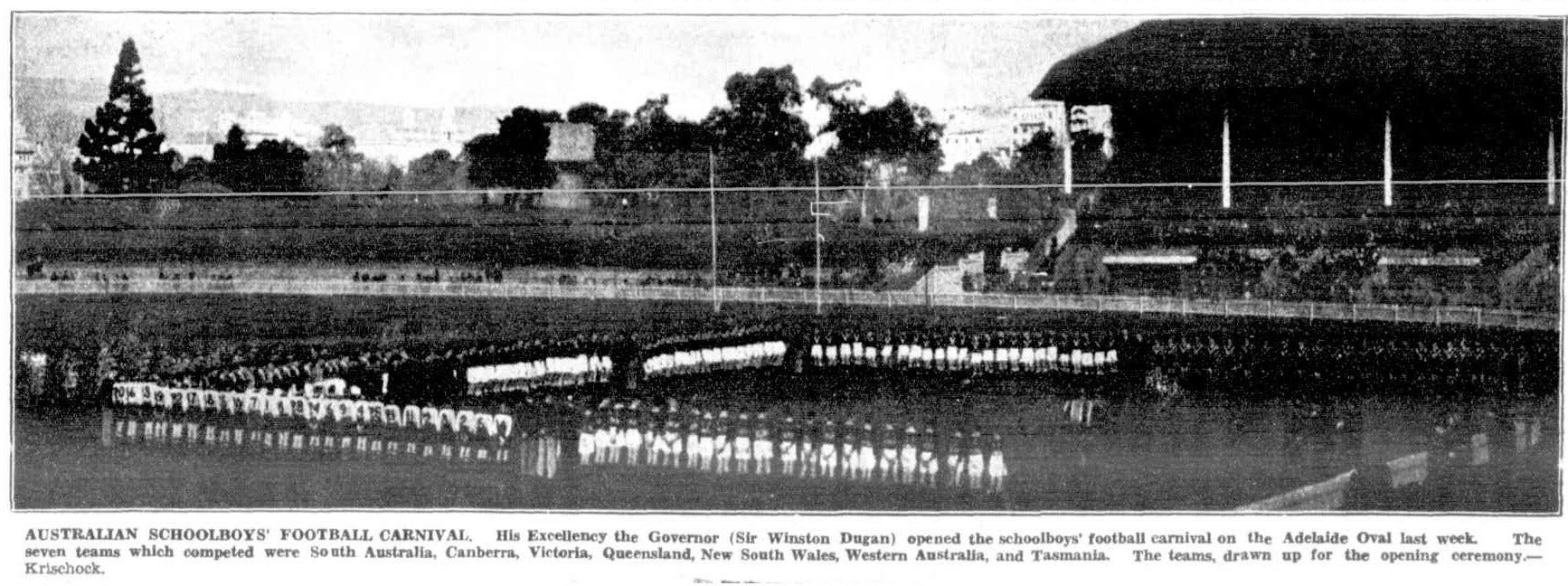
Canberra was outclassed by South Australia in its first match, losing by 59 points, not helped by inaccurate kicking for goal. In their next engagement, playing with the wind, they led Victoria by a goal at quarter time before succumbing by 52 points. The Blue and Golds then convincingly defeated New South Wales by 64 points, displaying ‘excellent marking and more speed’ than their opponents and with ‘Canberra’s defenders turning many attacks right at the goal front’. An 11-point loss to Queensland followed - Canberra ‘pressed closely in the final term and obtained the lead about half-way through, but Queensland rose to the occasion’. Canberra then overran Tasmania after quarter time to win by 52 points. In their final game, the Blue and Golds were unable match the high marking Western Australians, losing by 52 points (again) to finish the carnival in fifth place.27

Doug Bachli won (jointly) the J L Williams medal for best and fairest player at the carnival. Other Canberra players to play well included R Royal, R Kennard and I McDonald.28
National Football, The Canberra Times, Fri 12 Jun 1936, p.2; Eastlake Excels, The Canberra Times, Mon 11 May 1936, p.3. Trove - National Library of Australia, accessed 15 July 2025.
Marshall (1938) at p.36 provides short biographies of Roe and Seton. They edged out Alan Ware (Manuka) on 15 votes and Sam Dee (Ainslie) on 14 1/2 votes. The Canberra Times’s May report also claimed, plausibly but mistakenly, that the new medal would be named after Jerry Dillon, the first president of the League, and that, less plausibly, boundary umpires would award the votes. The first reference in the media to the ‘Mulrooney’ medal seems to have been in the 1936 annual report, published in March 1937, which confirmed that a decision to inaugurate the Medal had been taken at the start of the 1936 season: National Football, The Canberra Times, Fri 15 May 1936, p.4; National Football, The Canberra Times, Sat 12 Sep 1936, p.2; National Football, The Canberra Times, Sat 13 Mar 1937, p.4. Trove - National Library of Australia, accessed 15 July 2025.
The M.C.C were effectively the England cricket team: Manuka Oval, The Canberra Times, Thu 9 Apr 1936, p.4; Manuka Oval, The Canberra Times, Sat 11 Apr 1936, p.4; Manuka Oval, The Canberra Times, Fri 17 Apr 1936, p.3; National Football, The Canberra Times, Mon 20 Apr 1936, p.4; Manuka Oval, The Canberra Times, Sat 25 Apr 1936, p.3. Trove - National Library of Australia, accessed 15 July 2025.
National Football Season Opens, The Canberra Times, Mon 4 May 1936, p.3; National Football, The Canberra Times, Tue 5 May 1936, p.4. Trove - National Library of Australia, accessed 15 July 2025.
National Football, The Canberra Times, Tue 16 Jun 1936, p.4; National Football, The Canberra Times, Fri 7 Aug 1936, p.2; Kingston Oval, The Canberra Times, Tue 10 Mar 1936, p.3; National Football, The Canberra Times, Sat 25 Apr 1936, p.4; Ainslie Too Solid For Eastlake, The Canberra Times, Mon 25 May 1936, p.3; National Football, The Canberra Times, Sat 27 Jun 1936, p.4. Trove - National Library of Australia, accessed 15 July 2025. Department of the Interior: Memorandum from Civic Representative to Assistant Secretary, Works and Services Branch, 7 November 1935: NAA, A659, 1944/1/3425.
Exciting Football Semi-Final, The Canberra Times, Mon 7 Sep 1936, p.3; National Football, The Canberra Times, Tue 8 Sep 1936, p.4; National Football, The Canberra Times, Wed 9 Sep 1936, p.4; National Football, The Canberra Times, Fri 11 Sep 1936, p.4. Trove - National Library of Australia, accessed 15 July 2025.
National Football Season Opens, The Canberra Times, Mon 4 May 1936, p.3.Trove - National Library of Australia, accessed 15 July 2025.
Captain-coach, Jack Kennedy, seems to have been paid, with the CANFL covering at least part of his wage. Goulburn moved to a new home ground on Braidwood Road (formerly hockey fields). A proposal to change Goulburn’s club colours from maroon and blue to bottle green and gold did not proceed. The existing colours were, strangely, said to be ‘difficult to distinguish from Manuka colours’: Playing Coach?, Goulburn Evening Penny Post, Fri 6 Mar 1936, p.1; National Rules, Goulburn Evening Penny Post, Wed 1 Apr 1936, p.4; National Football, The Canberra Times, Mon 6 Apr 1936, p.2; National Rules, Goulburn Evening Penny Post, Mon 27 Apr 1936, p.6; Australian Code, Goulburn Evening Penny Post, Fri 1 May 1936, p.3; Eastlake Lucky At Goulburn, The Canberra Times, Mon 1 Jun 1936, p.3; Close Game, Goulburn Evening Penny Post, Tue 2 Jun 1936, p.6; National Rules, Goulburn Evening Penny Post, Thu 4 Jun 1936, p.6; Australian Rules, Goulburn Evening Penny Post, Mon 22 Jun 1936, p.6. Trove - National Library of Australia, accessed 15 July 2025.
The Canberra Times appears to have assumed that transport was the problem, probably in light of the Manuka forfeit a few weeks earlier. At the time, Goulburn officials did not intend to permanently disband the club, and indeed Goulburn played non-competition matches against Queanbeyan and Rosebery (from the second-tier Sydney Metropolitan Association) later in the season. Ainslie Too Strong, The Canberra Times, Mon 29 Jun 1936, p.3; Big Scores In National Games, The Canberra Times, Mon 29 Jun 1936, p.3; Acton Again, The Canberra Times, Mon 6 Jul 1936, p.3; Australian Code, Goulburn Evening Penny Post, Mon 6 Jul 1936, p.6; Goulburn Out, Goulburn Evening Penny Post, Tue 14 Jul 1936, p.1; Ainslie's Winning Way, The Canberra Times, Mon 13 Jul 1936, p.3; Australian Rules, Queanbeyan Age, Fri 17 Jul 1936, p.3; Australian Code, Goulburn Evening Penny Post, Wed 29 Jul 1936, p.4; Australian Code, Goulburn Evening Penny Post, Tue 25 Aug 1936, p.5; By 14 Points, Goulburn Evening Penny Post, Wed 16 Sep 1936, p.7; National Football, The Canberra Times, Tue 9 Jun 1936, p.4. Trove - National Library of Australia, accessed 15 July 2025.
No references to Queanbeyan’s captain have been found in media reports. New players included Netting from Wagga, Walters from Brunswick Juniors; Schow, Prendergast, Campbell and Bastow were key returnees. Queanbeyan recruited the Mulquinney brothers and Jack Kennedy from Goulburn, although the latter appears to have only played the last game of the season: National Football, The Canberra Times, Sat 11 Apr 1936, p.4; Australian Rules Football, Queanbeyan Age, Tue 21 Apr 1936, p.1; Premiers Defeated, The Canberra Times, Mon 4 May 1936, p.3; National Football, The Canberra Times, Mon 15 Jun 1936, p.3; Australian Rules, Queanbeyan Age, Fri 19 Jun 1936, p.4; Australian Code, Goulburn Evening Penny Post, Wed 29 Jul 1936, p.4; Queanbeyan Club Notes, Queanbeyan Age, Tue 30 Jun 1936, p.4; National Football, The Canberra Times, Fri 10 Jul 1936, p.6; National Football, The Canberra Times, Sat 11 Jul 1936, p.3; National Football, The Canberra Times, Fri 7 Aug 1936, p.2; Queanbeyan Brilliant, The Canberra Times, Mon 10 Aug 1936, p.3; National Football, The Canberra Times, Tue 11 Aug 1936, p.4; Australian Rules, Queanbeyan Age, Fri 28 Aug 1936, p.2; Ainslie's Narrow Escape, The Canberra Times, Mon 31 Aug 1936, p.3. Trove - National Library of Australia, accessed 15 July 2025.
Pat Moroney captained Manuka in 1936. Ten players from its 1935 side did not play in its 1936 first semi-final team. In July, a Manuka side, augmented by several players from other clubs, visited Sydney where it tied with the second-tier Sydney Metropolitan Association combined side: National Football, The Canberra Times, 21 Sep 1935, p.3; National Football, The Canberra Times, Mon 27 Apr 1936, p.4; Club Prospects, The Canberra Times, Fri 1 May 1936, p.7; Surprise Defeat Of National Football Premiers, The Canberra Times, Mon 18 May 1936, p.3; National Football, The Canberra Times, Tue 16 Jun 1936, p.4; Big Scores In National Games, The Canberra Times, Mon 29 Jun 1936, p.3; National Football, The Canberra Times, Tue 21 Jul 1936, p.4; National Football, The Canberra Times, Fri 4 Sep 1936, p.3; National Football, The Canberra Times, Sat 5 Sep 1936, p.3; Exciting Football Semi-Final, The Canberra Times, Mon 7 Sep 1936, p.3; National Football, The Canberra Times, Tue 5 May 1936, p.4; Ainslie's Winning Way, The Canberra Times, Mon 13 Jul 1936, p.3. Trove - National Library of Australia, accessed 15 July 2025.
Dave Elliman was captain of Eastlake in 1936. Its preliminary final side contained 12 players from the same match in 1935. Two 1935 players, McKinstry and J McGinness, didn’t play in the 1936 match because of injury: Ainslie Too Solid For Eastlake, The Canberra Times, Mon 25 May 1936, p.3; National Football, The Canberra Times, Fri 3 Jul 1936, p.4; National Football, The Canberra Times, Fri 21 Aug 1936, p.2; Ainslie Running Away Champions, The Canberra Times, Mon 14 Sep 1936, p.3; National Football, The Canberra Times, Sat 19 Sep 1936, p.3; National Football, The Canberra Times, Tue 27 Apr 1937, p.4; National Football, The Canberra Times, Tue 9 Jun 1936, p.4; National Football, The Canberra Times, Sat 2 May 1936, p.2; National Football, The Canberra Times, Fri 17 Jul 1936, p.5. Trove - National Library of Australia, accessed 15 July 2025.
Jim Toohey was captain-coach of Acton in 1936. The photo below was possibly taken on 4 July as a gift to a departing supporter of the club: National Football, The Canberra Times, Sat 4 Jul 1936, p.5; Acton's Impressive Win, The Canberra Times, Mon 1 Jun 1936, p.3; National Football, The Canberra Times, Sat 6 Jun 1936, p.3; Ainslie Extended, The Canberra Times, Mon 22 Jun 1936, p.3; Rational Football, The Canberra Times, Tue 23 Jun 1936, p.3; National Football, The Canberra Times, Sat 27 Jun 1936, p.4; Australian Code, Goulburn Evening Penny Post, Mon 6 Jul 1936, p.6; National Football, The Canberra Times, Sat 11 Jul 1936, p.3; National Football, The Canberra Times, Tue 28 Jul 1936, p.4; National Football, The Canberra Times, Tue 1 Sep 1936, p.4; National Football, The Canberra Times, Sat 19 Sep 1936, p.3; National Football, The Canberra Times, Tue 22 Sep 1936, p.4; Canberra Team To Meet Queensland, The Canberra Times, Mon 10 Aug 1936, p.3; National Football, The Canberra Times, Sat 2 May 1936, p.2. Trove - National Library of Australia, accessed 15 July 2025.
Lionel James captained Ainslie in 1936 and Jim Keogh was coach: National Football, The Canberra Times, Mon 20 Apr 1936, p.4; National Football, The Canberra Times, Mon 27 Apr 1936, p.4; Premiers Defeated, The Canberra Times, Mon 4 May 1936, p.3; National Football, The Canberra Times, Sat 9 May 1936, p.5; National Football, The Canberra Times, Sat 13 Jun 1936, p.3; Council for Scientific and Industrial Research, 1935-36 Annual Report; Amateur Association, The West Australian, Fri 21 Sep 1934, p.15; National Football, The Canberra Times, Sat 12 Sep 1936, p.2; National Football, The Canberra Times, Tue 15 Sep 1936, p.4; Ainslie Win Premiership With Unbeaten Record, The Canberra Times, Mon 28 Sep 1936, p.3; National Football, The Canberra Times, Tue 29 Sep 1936, p.4; Ainslie Social, The Canberra Times, Tue 29 Sep 1936, p.4; Athletics, The Canberra Times, Mon 28 Sep 1936, p.3; National Football, The Canberra Times, Mon 23 Nov 1936, p.2. Trove - National Library of Australia, accessed 15 July 2025.
The main field umpires for 1936 were R. Miller, Frank Bishop, and Wright. A marked ‘paucity of umpires’ became apparent as the junior and intermediate competitions commenced. It was noted that Eastlake identities, George Bulpin, Herb Jenkins and A.L Morecombe, had already taken on umpiring duties: National Football, The Canberra Times, Sat 30 May 1936, p.3. Trove - National Library of Australia, accessed 15 July 2025.
National Football, The Canberra Times, 23 Apr 1937, p.2. Trove - National Library of Australia, accessed 19 July 2025.
While the Canberra Times reports intermediate matches being played between Saturday, 23 May and Saturday, 25 July, it does not mention a regular season or a final series. The matches played could be interpreted as comprising a four-match regular season followed by two semi-finals (Manuka v Eastlake; Queanbeyan v Ainslie) and a grand final between Manuka and Queanbeyan. The Eastlake-Ainslie match also played on 25 July could have been a third-v-fourth playoff. The first mention of Manuka winning the premiership appears to be in an article in March 1937: National Football, The Canberra Times, Sat 25 Apr 1936, p.4; Club Prospects, The Canberra Times, Fri 1 May 1936, p.7; National Football, The Canberra Times, Fri 22 May 1936, p.5; Australian Rules, Queanbeyan Age, Tue 26 May 1936, p.3; National Football, The Canberra Times, Fri 29 May 1936, p.3; National Football, The Canberra Times, Fri 5 Jun 1936, p.4; National Football, The Canberra Times, Fri 19 Jun 1936, p.4; National Football, The Canberra Times, Fri 3 Jul 1936, p.4; National Football, The Canberra Times, Fri 10 Jul 1936, p.6; National Football, The Canberra Times, Fri 17 Jul 1936, p.5; National Football, The Canberra Times, Fri 24 Jul 1936, p.5; National Football, The Canberra Times, Sat 25 Jul 1936, p.3; Junior League, The Canberra Times, Sat 25 Jul 1936, p.3; National Football, The Canberra Times, 23 Apr 1937, p.2. Trove - National Library of Australia, accessed 15 July 2025.
The CANFL annual general meeting in March 1937 included ‘discussion of the prospect of establishment of a second eighteen competition…’ (suggesting one didn’t already exist): Junior League, The Canberra Times, Sat 25 Jul 1936, p.3; National Football, The Canberra Times, Thu 31 Dec 1936, p.4; National Football, The Canberra Times, Sat 13 Mar 1937, p.4. Trove - National Library of Australia, accessed 15 July 2025.
A Norths versus Souths juniors match was played as a curtain-raiser to the senior grand final in September. Only occasional primary schools games appear to have been played: National Football, The Canberra Times, Fri 8 May 1936, p.6; National Football, The Canberra Times, Fri 5 Jun 1936, p.4; National Football, The Canberra Times, Fri 10 Jul 1936, p.6; School Football, The Canberra Times, Sat 18 Jul 1936, p.3; National Football, The Canberra Times, Fri 24 Jul 1936, p.5; Ainslie Equals 10 Year Old Record, The Canberra Times, Mon 27 Jul 1936, p.3; Junior Final, The Canberra Times, Mon 3 Aug 1936, p.3; National Football, The Canberra Times, Fri 7 Aug 1936, p.2; Eastlake Juniors, The Canberra Times, Mon 10 Aug 1936, p.3; National Football, The Canberra Times, Sat 26 Sep 1936, p.3; Marshall (1981), pp12-14. Trove - National Library of Australia, accessed 15 July 2025.
Queensland withdrew from the amateur carnival - the first such national carnival to be held - when South Australia was unable to offer it financial assistance: National Football, The Canberra Times, Fri 12 Jun 1936, p.2; National Football, The Canberra Times, Fri 17 Jul 1936, p.5; Australian Code, The Courier-Mail, Tue 28 Jul 1936, p.9; National Football, The Canberra Times, Tue 28 Jul 1936, p.4; National Football, The Canberra Times, Fri 31 Jul 1936, p.7; Amateur League Carnival, The Advertiser, Wed 12 Aug 1936, p.23. Trove - National Library of Australia, accessed 15 July 2025.
The captain was Jim Toohey (Acton) with Dave Elliman (Eastlake) vice-captain). The Queensland manager was Mr W S Riding: Junior Final, The Canberra Times, Mon 3 Aug 1936, p.3; National Football, The Canberra Times, Tue 4 Aug 1936, p.4; Interstate Team, The Canberra Times, Sat 8 Aug 1936, p.3; Canberra Team To Meet Queensland, The Canberra Times, Mon 10 Aug 1936, p.3; National Football, The Canberra Times, Tue 11 Aug 1936, p.4; Interstate Football, The Canberra Times, Thu 13 Aug 1936, p.2. Trove - National Library of Australia, accessed 15 July 2025.
National Football, The Canberra Times, Fri 14 Aug 1936, p.6; Visiting Footballers, The Canberra Times, Sat 15 Aug 1936, p.3. Trove - National Library of Australia, accessed 15 July 2025.
Sparkling National Football, The Canberra Times, Mon 17 Aug 1936, p.3; Australian Rules, The Courier-Mail, Mon 17 Aug 1936, p.10. Trove - National Library of Australia, accessed 15 July 2025.
Queensland Team Entertained, The Canberra Times, Mon 17 Aug 1936, p.3; National Football, The Canberra Times, Tue 18 Aug 1936, p.4; Visiting Footballers, The Canberra Times, Sat 15 Aug 1936, p.3. Trove - National Library of Australia, accessed 15 July 2025.
The team seems to have been coached, at various times, by George Welch (Ainslie), Stewart Bastow (Queanbeyan), Herb Jenkins (Eastlake), Les Perry (Acton) and Cec Ramage (Acton). It was managed by J E Lenehan and W Hetherington. Marshall (1981) at p.14) says that Vic Richardson coached the team in Adelaide, which is plausible given his long and close association with the Sturt Football Club, based at Unley Oval, where the Canberrans were given an official welcome and may have been based: Adelaide Carnival, The Canberra Times, Mon 8 Jun 1936, p.3; Adelaide Carnival, The Canberra Times, Sat 13 Jun 1936, p.3; National Football, The Canberra Times, Fri 12 Jun 1936, p.2; Carnival Team, The Canberra Times, Mon 29 Jun 1936, p.3; National Football, The Canberra Times, Tue 30 Jun 1936, p.3; National Football, The Canberra Times, Fri 3 Jul 1936, p.4; Schools Carnival Team Successful, The Canberra Times, Mon 20 Jul 1936, p.3; School Carnival Team, The Canberra Times, Mon 17 Aug 1936, p.3; National Football, The Canberra Times, Fri 21 Aug 1936, p.2. Trove - National Library of Australia, accessed 15 July 2025.
National Football, The Canberra Times, Fri 21 Aug 1936, p.2; Round The Pickets, The Advertiser, Fri 21 Aug 1936, p.9; National Football, The Canberra Times, Tue 25 Aug 1936, p.4. Trove - National Library of Australia, accessed 15 July 2025.
Matches were played on South Australian league grounds: Thebarton, (SA, Victoria, Tasmania), Alberton (Queensland), Norwood (NSW and Western Australia): Schools' Football Carnival, The Advertiser, Fri 28 Aug 1936, p.11; Adelaide Carnival, The Canberra Times, Mon 31 Aug 1936, p.3; State Schools Carnival, The Advertiser, Mon 31 Aug 1936, p.7; Schools' Football Carnival, The Advertiser, Tue 1 Sep 1936, p.6; Schools' Football Carnival, The Advertiser, Thu 3 Sep 1936, p.23; Adelaide Carnival, The Canberra Times, Fri 4 Sep 1936, p.3; Adelaide Carnival, The Canberra Times, Sat 5 Sep 1936, p.3; Schools' Football Carnival, The Advertiser, Sat 5 Sep 1936, p.21; Victoria Wins Hudson Cup, The Advertiser, Tue 8 Sep 1936, p.35. Trove - National Library of Australia, accessed 15 July 2025.
Presentation Of Cup, The Advertiser, Tue 8 Sep 1936, p.35. Trove - National Library of Australia, accessed 15 July 2025.